
How to Compare International School Thailand Options More Effectively


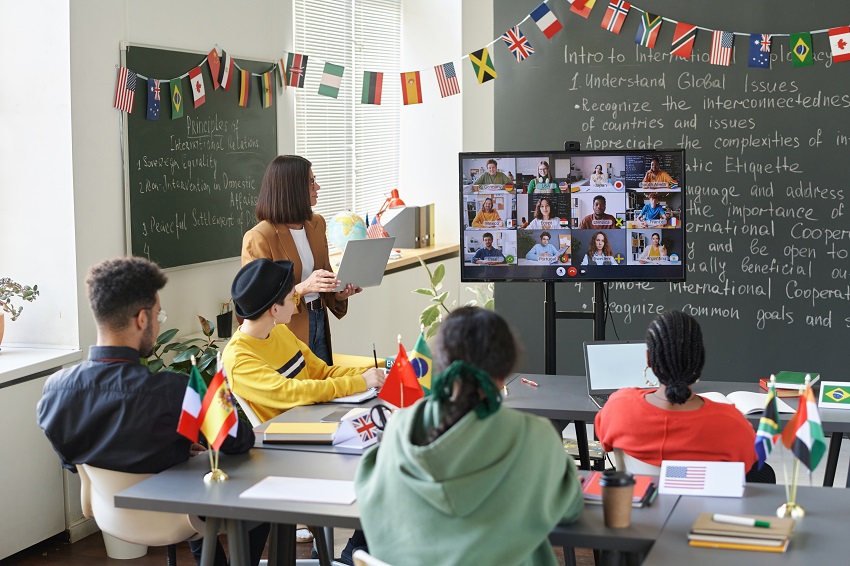
Choosing the right school for a child is among the most vital choices that any family will make. Given the explosive growth of education across Southeast Asia, you probably have too many options to choose from. The underlying message to parents is that moving beyond selection approaches based on surface indicators like the look and feel of a school, parents need to adopt more rigorous criteria including assessment against standardized data, longer term outcomes as well as cultural fit.
Curricular Framework and University Pathways analysis
Curriculums are what primarily differentiate international school thailand options. Most of the institutions run either British National Curriculum (IGCSE and A-Levels) or International Baccalaureate (IB). Though both are globally recognised, they serve different strategic learning objectives. UK has a much more granular system that allows for specialization rather early on in the ladder while the IB promotes breadth and inter-disciplinariry. Parents should undertake a school university matriculation list—for whatever university students are entering, what specifically in that course—and ask questions of the school as to how their child can be assisted career-wise.
Evaluate Teacher Quality and Retention
Its faculty makes a school what it is. Staff qualifications and experience is one of the most important factors, when looking to enroll at an international school thailand. The best schools tend to hire teachers with solid backgrounds in their home countries, usually including advanced degrees. Moreover, the staff retention rate is an essential (if sometimes neglected) metric. High rates of teacher turnover can interrupt a child's academic continuity and indicate instability with the school's leadership or culture. A school with a stable faculty is a sign of a learning-friendly and well-managed school.
Verify Global Accreditations and Benchmarks
Reputation based on objective checks. Well-recognized international school thailand you are in is affiliated with the accreditations of internationally recognized organizations like the Council of International Schools (CIS), Western Association of Schools and Colleges (WASC) or New England Association of Schools and Colleges(NEASC). These organizations perform comprehensive, multi-year evaluations of the operations and safety protocols followed at a school, as well as its quality of education. These inspections offered by a small number of international bodies are mainly undertaken on a voluntary basis and only by schools that wish to be seen as upholding the highest standards, anywhere in the world.
Utilize Data-Driven Comparison Platforms
Visiting each website of source for an international school thailand is time consuming, and the information does not always carry weight. Databases specifically designed for this purpose, like the internationalschoolsdb enables parents to perform side-by-side comparisons of schools based on standardized metrics. These platforms offer clear statistics about tuition rates, student-to-teacher ratios, and mixes among nationalities. Using this method allows the list to be trimmed down to only the institutions that are compliant with a family’s financial and logistical needs before physical tours are organized.
Evaluate holistic development and school culture
Academic performance is a top priority, but the child's environment relies on the school system. You may want to see how students and staff interact on campus visits. Does the school teach "soft skills" such as empathy, leadership and resilience? Brighton College Bangkok is an example of a school known for its balance between academic excellence and a pastoral care system centred on kindness. The international school in Thailand, for your child is the one where the institutional values are aligned with family values so that your child feels happy, challenged and keen to grow up!